
|
How do I set up Audience Optimization for Google Ads?
This guide will walk you through setting up Audience Optimization for Google Ads step by step. If you haven’t already, please read the short article below first so you understand the general strategy:
Unlock Better Ad Optimization with Audience Optimization
Step 1 – Review your existing Google Tag configuration
Audience Optimization will send all of your accurate conversion data back to Google. So the first step is to review your existing setup and make sure your Google Tag is not generating any conversion events, as this will pollute your data.
First, review your Google Tag setup in GTM, GA4, gtag.js, or any plugins or theme code you’ve used in the past.
Remove or disable anything that triggers browser-side conversions. This includes Google Ads conversion tags, GA4 to Google Ads conversion forwarding, or any automatically created events such as lead, begin_checkout, purchase etc.
Next, review the Google Tag code you’ve added to your webpages.
If you previously added Google conversion events via GTM, plugins, theme code, Shopify apps, WordPress add-ons, or any custom
gtag('event', ...) code, remove those now so your Google Tag sends only page_view events and no conversion events from the browser.Finally, edit your existing Conversion Actions and set them to Secondary (Observe Only) so Google will no longer optimize based on your old, polluted data. You’ll be creating new ones soon.
Step 2 - Ensure that you have auto-tagging enabled
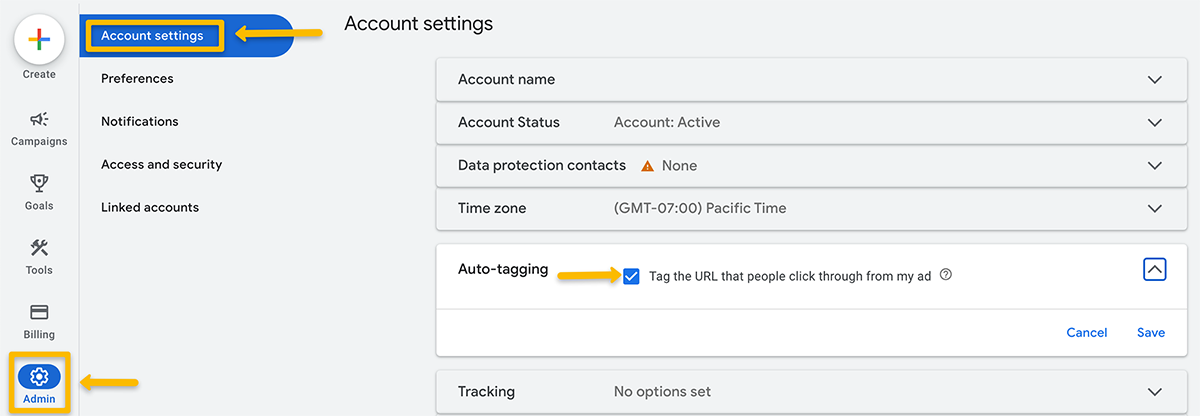
In Google Ads, go to Admin > Account Settings and check the “Auto-tagging” box:
Step 3 - Create One or More New Conversion Actions
Your existing Conversion Actions are polluted with bad data and should not be used. We strongly recommend you create new Conversion Actions for use with ClickMagick.
If you plan to optimize for more than one type of conversion, such as Leads and Sales – or just want to have that flexibility in the future – create a separate new Conversion Action for each one.
Sending multiple conversion types to Google is perfectly fine as long as they are sent to separate Conversion Actions. This allows you to decide later which Conversion Action you want to optimize for in your Google Ads campaigns, while keeping your data clean and your optimization consistent.
To create a new Conversion Action, just follow the steps in the article below:
How do I create a new conversion action in Google Ads?
Note: After creating a new Google Conversion Action, it can take up to 4 hours to become active and available. It may show as “Inactive” in Google, but it will become active when you send your first conversion to it.
Step 4 - Integrate your Google Ads account with ClickMagick
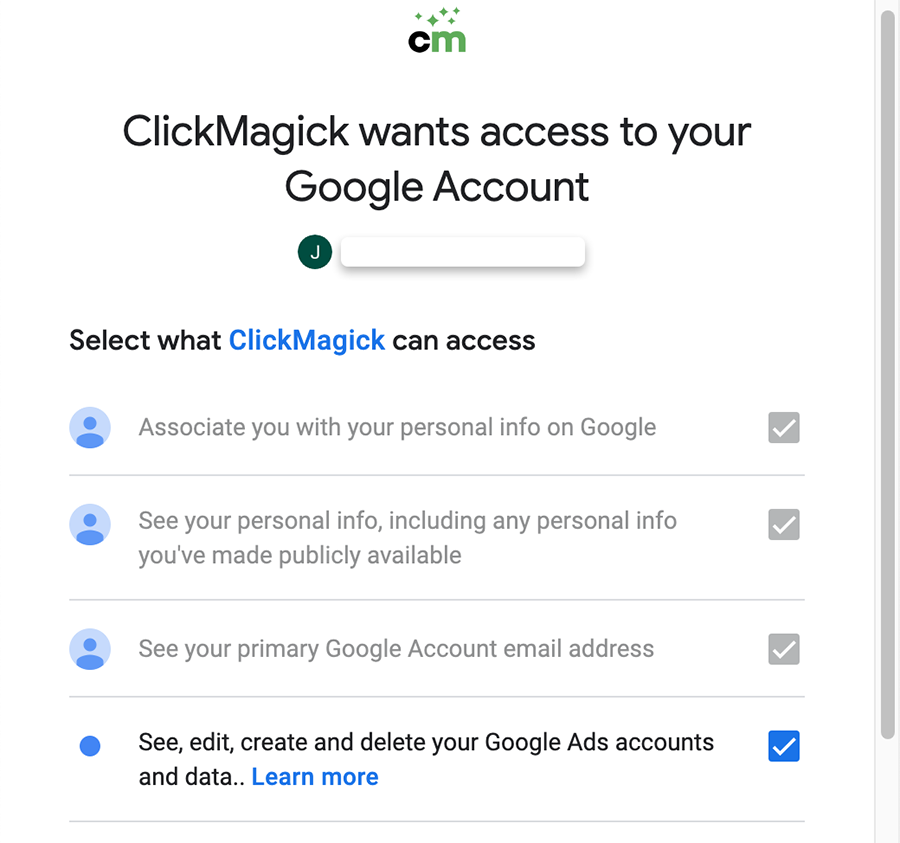
You can integrate your Google Ads account from the Integrations page, available under the Account menu at the top of any page. Once there, click on “Sign In With Google” and sign in to the Google account that contains your ad accounts. Make sure to check all four boxes as shown below.
Then head to your Project Dashboard, then Tools, then Audience Optimization:

Select the Google Ads tab, switch Enabled to “Yes,” and the Default Conversion Action window will pop up (if this is the first time configuring the automatic configuration):
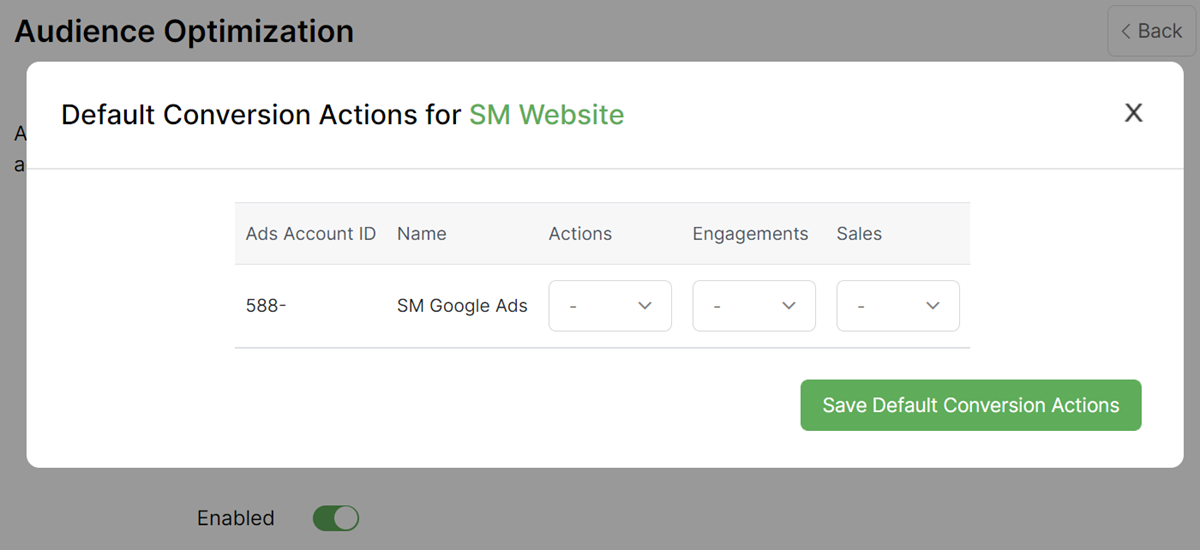
Most users want to primarily optimize for Sales, so if that’s the case, select the Conversion Action you want in the Sales column, hit Save, and that’s all there is to it.
But know that you can also separately create and optimize for other things like Opt-Ins. If you do, select the appropriate Conversion Actions for ClickMagick Actions and/or Engagements as well.
The Default Conversion Actions allow you to specify a single Conversion Action for each of Actions, Engagements and Sales within a single Project.
If you need to do something more advanced you’ll want to set up Advanced Rules, which you can learn about below:
How do I set up Advanced Rules for Audience Optimization?
Step 5 – Capture and Send Visitor Info with your Google Conversions
To help with ad optimization, you’ll want ClickMagick to send as much data about your conversions as possible.
So if you haven’t already, follow the steps in this article to allow ClickMagick to capture visitor info:
How do I capture visitor info from forms on my site in ClickMagick?
Once you’ve done that, just enable Enhanced Conversions in Google Ads by following these steps:
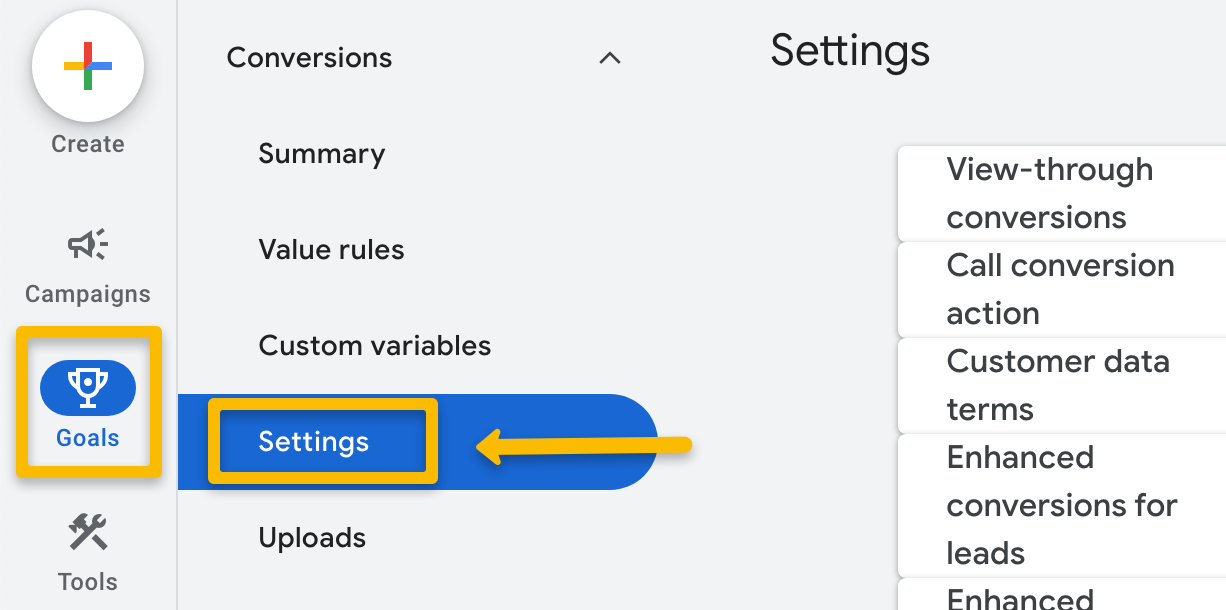
In your Google Ads dashboard, click on “Goals” and then “Settings”:
Expand the section that says “Enhanced Conversions for Leads”
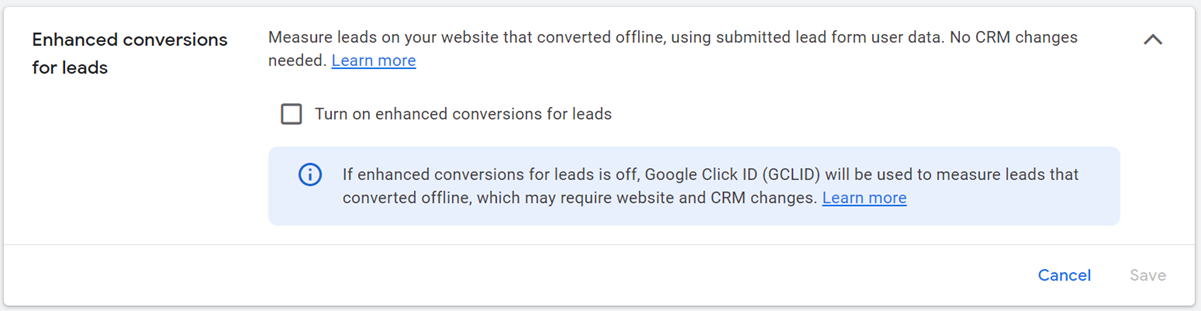
Check the box “Turn on enhanced conversions for leads”.
Note: If you haven’t previously accepted the customer data terms, you will be automatically prompted to do so. You have to accept the terms to enable this.
Once the box is checked, you will see a dropdown to choose the method for setting up and managing user-provided data. If you aren’t sure which option to choose, click the link to the right of the dropdown, and Google will walk you through how to determine the best one.
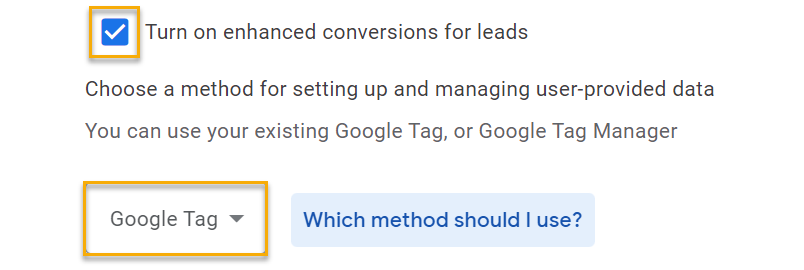
Click save to confirm your changes. If done correctly, you should see the settings look like this:

Once you've set this all up, ClickMagick will automatically capture visitor info from your website or online store, and send it along with your conversion data back to your Google Ads account.
At this point you will literally get the best event matching and ad optimization that Google Ads is capable of, using their recommended partner integration method for the Conversions API.
Step 6 – Implement Google’s Consent Mode v2 framework (if you run ads in the EEA or UK)
Consent Mode v2 is Google’s updated framework designed to integrate website visitor consent preferences with Google’s advertising and analytics tools. This is now mandatory as of March 2024 if you run Google ads in the EEA or UK.
Learn more in the article below …
What should I know about Google's Consent Mode v2?
Step 7 – Verify things are working correctly
In Audience Optimization, there’s a detailed log that you can use to verify things are working properly.
Once the log shows that conversions have been sent to Google successfully, wait a bit then check your new Conversion Actions in Google Ads to make sure they are receiving data from ClickMagick.
Use Google Tag Assistant to confirm that your Google Tag is only sending
page_view events and is not firing any conversion events from the browser.Finally, in Google Ads, verify that your new Conversion Actions are receiving events marked as coming from API or server-side and that no other unexpected events are appearing there.
Please note that while we send your conversions to Google in real-time, things are not real-time on their end and it can take anywhere from 15 minutes to several hours for things to be visible on their end.
Article 926 Last updated: 11/27/2025 9:30:32 AM
https://www.clickmagick.com/kb/?article=926